Rosalind Whitehouse

Sample projects

Recent work — September 2026

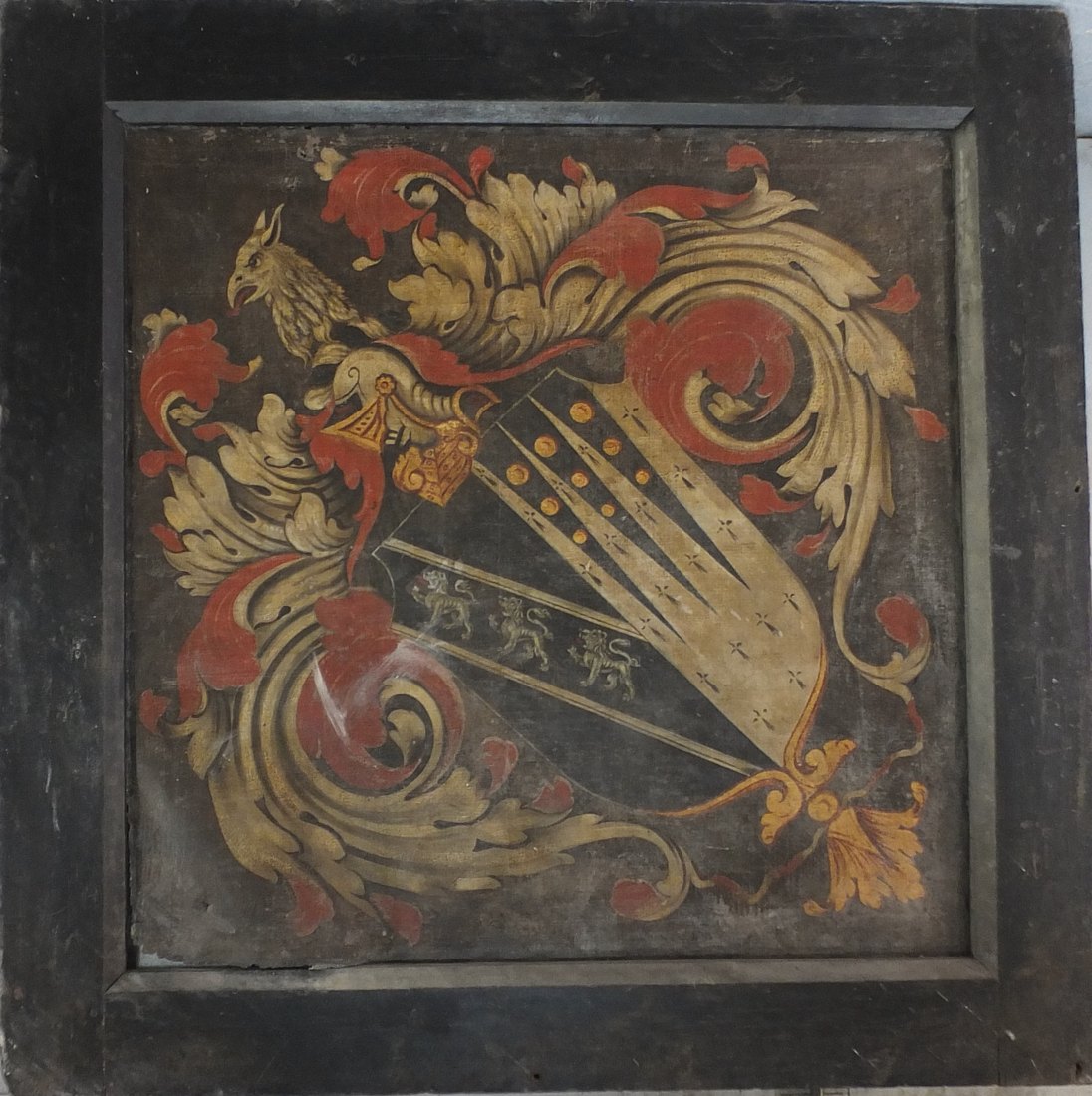
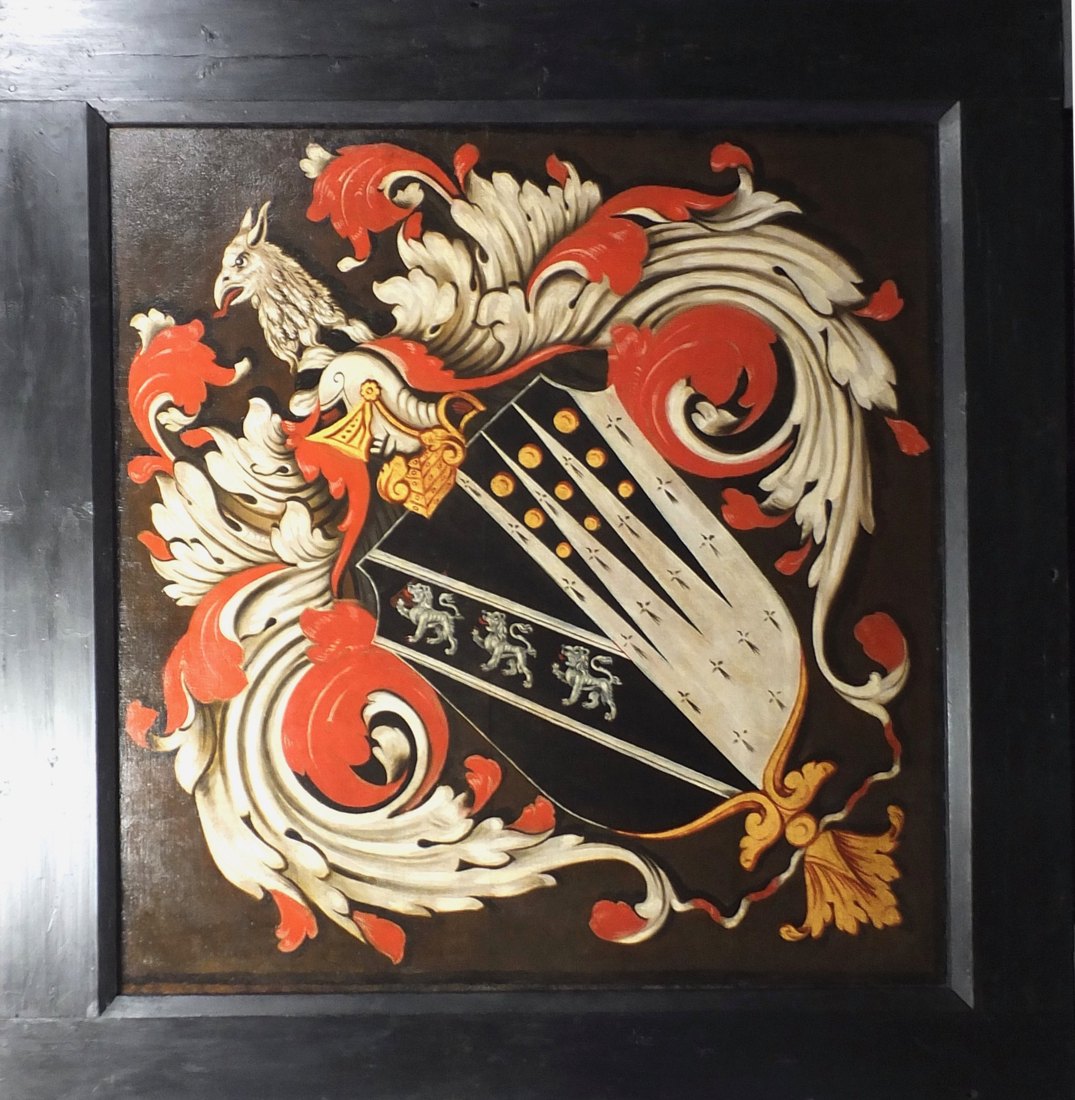
Hatchment from Powerstock Church, Dorset

Powerstock hatchment before conservation: a square framed heraldic panel, its griffin crest, scrolling mantling and shield dulled to muted reds and ochres under dirt and discoloured varnish
Before
Powerstock hatchment after conservation: the same heraldic panel with vivid scarlet and cream mantling, a crisp black shield with silver lions and gold roundels, and a fresh dark frame
After

A long but rewarding job. The hatchment had been nailed to the wall, so that damp had penetrated the structure and rotted the nails. The work included careful packing and transport, and reframing so the painting could return to the church properly protected.

Read more on Facebook

Case studies

These projects are described on Rosalind's profile with ICON, the Institute of Conservation.

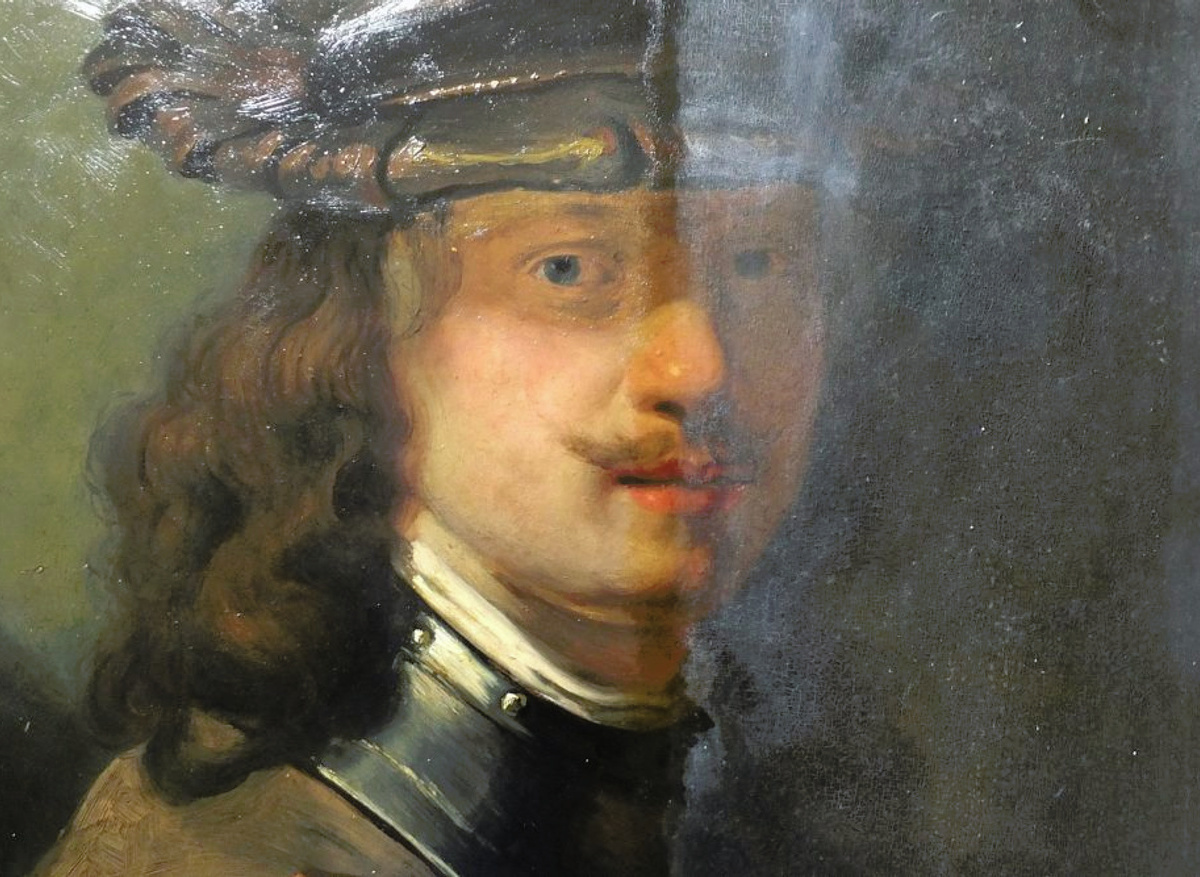
Portrait of a young man with shaded eyes, after Rembrandt, during removal of discoloured varnish

Portrait of a young man with shaded eyes, after Rembrandt

This panel was the same size as a self portrait long believed to be by Rembrandt that is in the Gemaldegalerie in Berlin.

It was coated with dirt and yellowed varnish, and the background had been repainted – possibly to hide the many little lumpy lead soap inclusions and showed as white spots.

Cleaning revealed a painting in very good condition and of good quality; further investigations may be able to link it to Rembrandt’s busy workshop.

Discuss a project like this
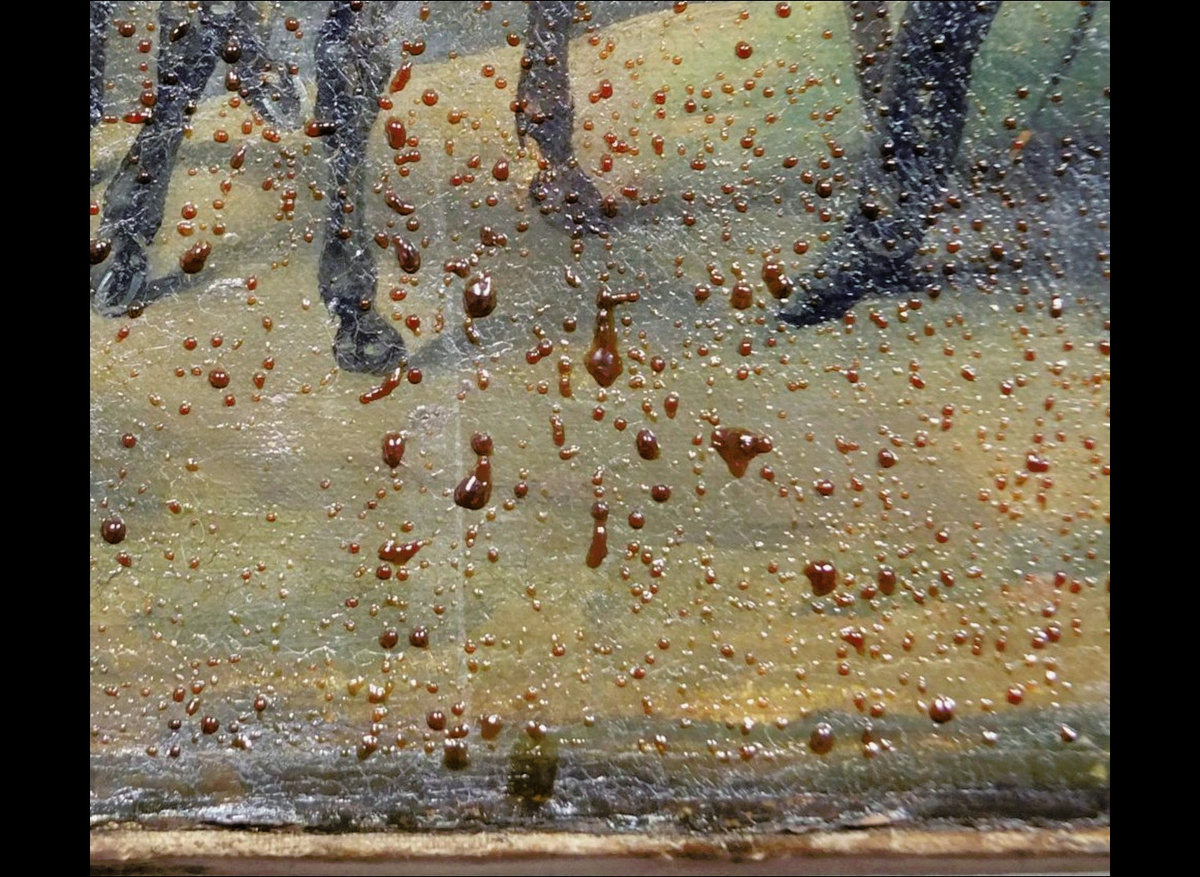
Animal glue softened by water damage oozed through cracks and hardened on the paint surface

Animal glue softened by water damage

Increasingly heavy rainfall can overwhelm guttering in historic houses, as happened at Bowood House in Wiltshire, the home of the Lansdowne family.

During a storm, water ran down the back of this painting by Horace Vernet (1789-1863) of the Battle of Hanau. It rapidly saturated the lower part of the canvas, causing glues from sizing and lining to seep through the cracks to the front of the painting.

Discuss a project like this
Flaking paint before treatment

Flaking paint before treatment

A 1950’s family portrait had become damp, resulting in detaching paint.

The project involved the reattachment of flaking and consolidation of incipiently flaking paint and restoring areas of loss to match a very matte paint surface.

Discuss a project like this
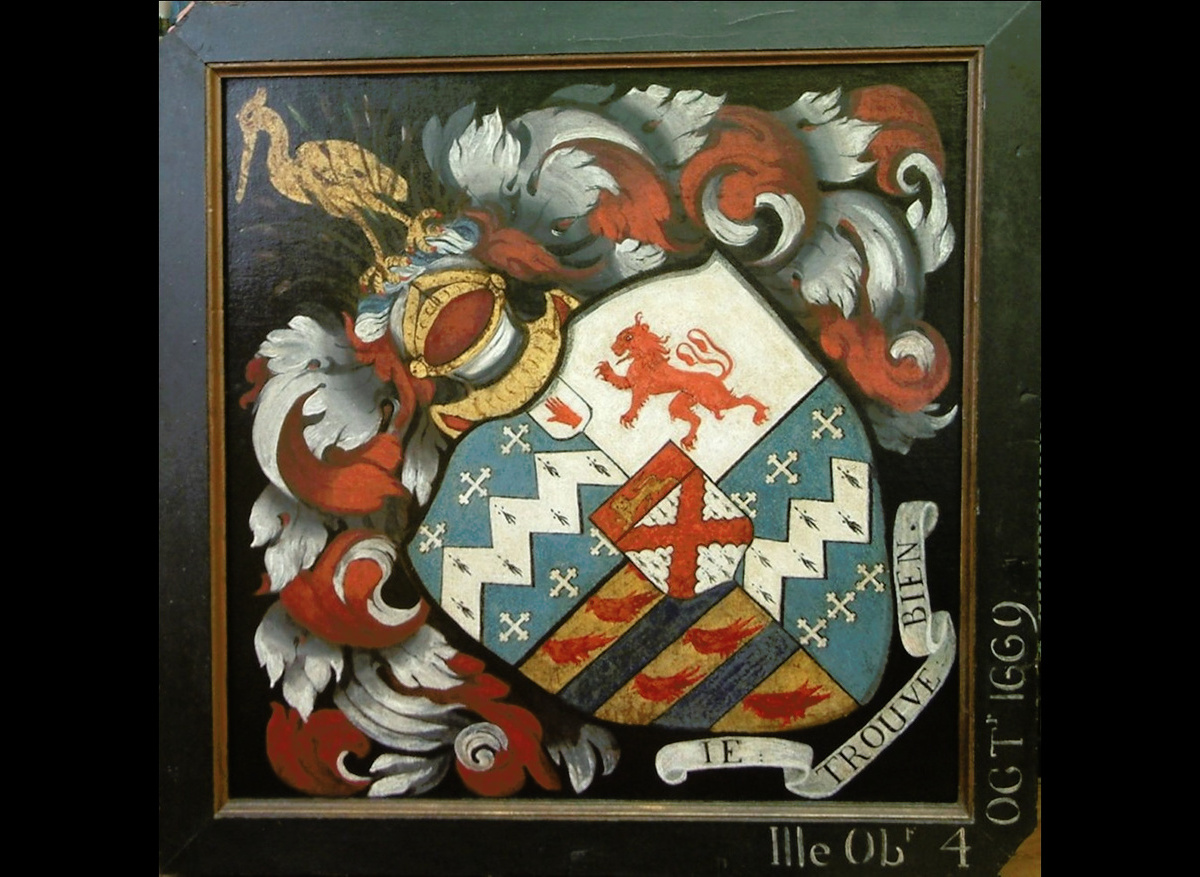
Ten hatchments in Kedington Church, Suffolk, were cleaned, conserved and restored

Ten hatchments in Kedington Church, Suffolk

A major project was at the Suffolk Church of Kedington, where a cycle of ten hatchments, hung high up in the Nave, all needed to be taken down, cleaned, lined and restored and reinstated whilst respecting the fabric of the building.

This involved the complexities of liaising with Church Architect, parishioners, builders and scaffolders.

The hatchments had been repainted in the past, as well as having suffered from the vagaries of Church environmental hazards.

Discuss a project like this
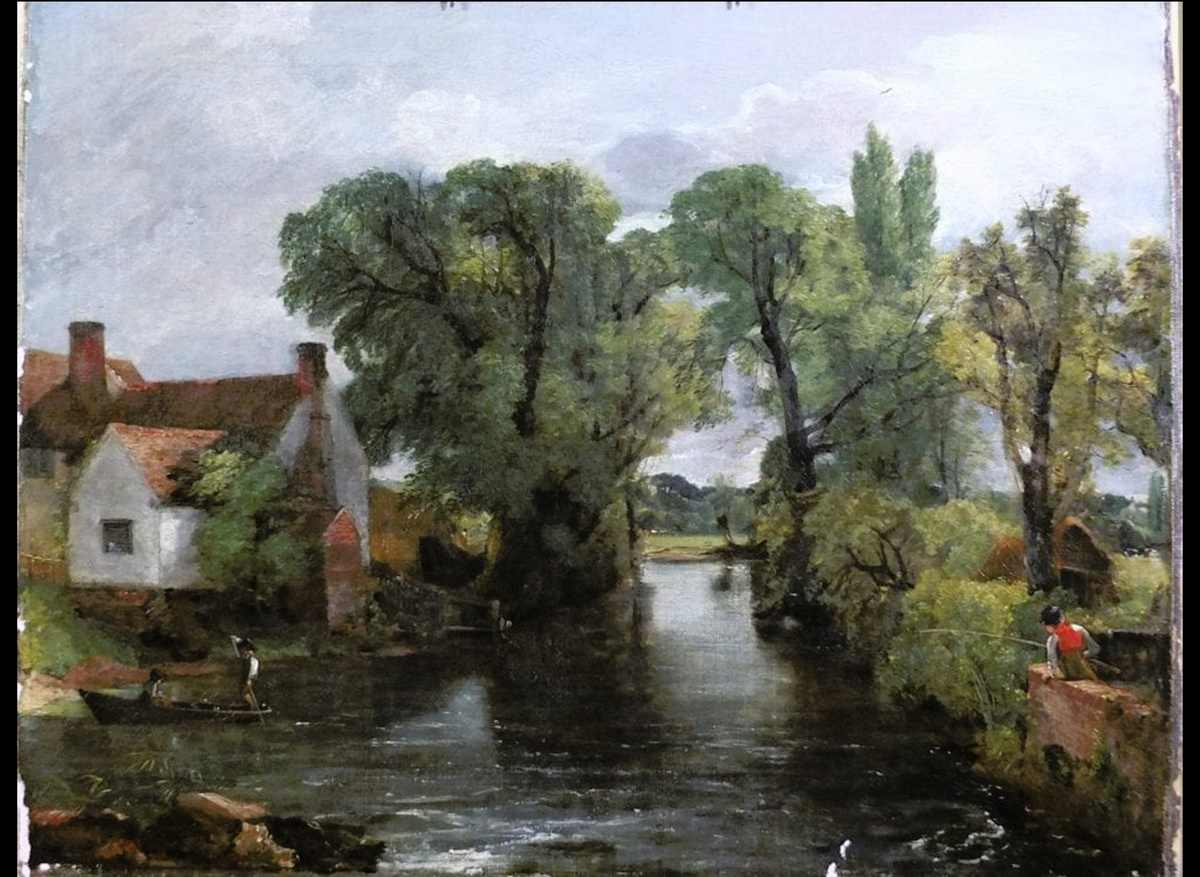
John Constable's The Millstream, 1814, a river landscape with a mill and trees, during conservation in public view at Christchurch Mansion

The Millstream, John Constable, 1814

This conservation project took place in public view in Christchurch Mansion Museum, Ipswich. The painting of the millstream at Flatford had not been cleaned for over 100 years.

After researching the condition of the painting and obtaining scientific analysis of the paint and varnish, the process of removal of dirt and varnish layers was carefully planned. Daily Q & A sessions were held, where I was able to discuss the usefulness of information given by X-rays and paint sample analysis.

The cleaning made headlines: as the hundred-year-old yellowed varnish came away, a tiny kingfisher appeared over the water. Constable had originally painted birds in the middle of the composition, then painted them out — hidden for two centuries until Rosalind's cleaning revealed them, and a ghostly earlier position of the chimney as well. The discovery was reported by The Telegraph and covered on national television.

In the press

The kingfisher discovery was reported by The Telegraph and Artdaily, and covered on national television.
Discuss a project like this
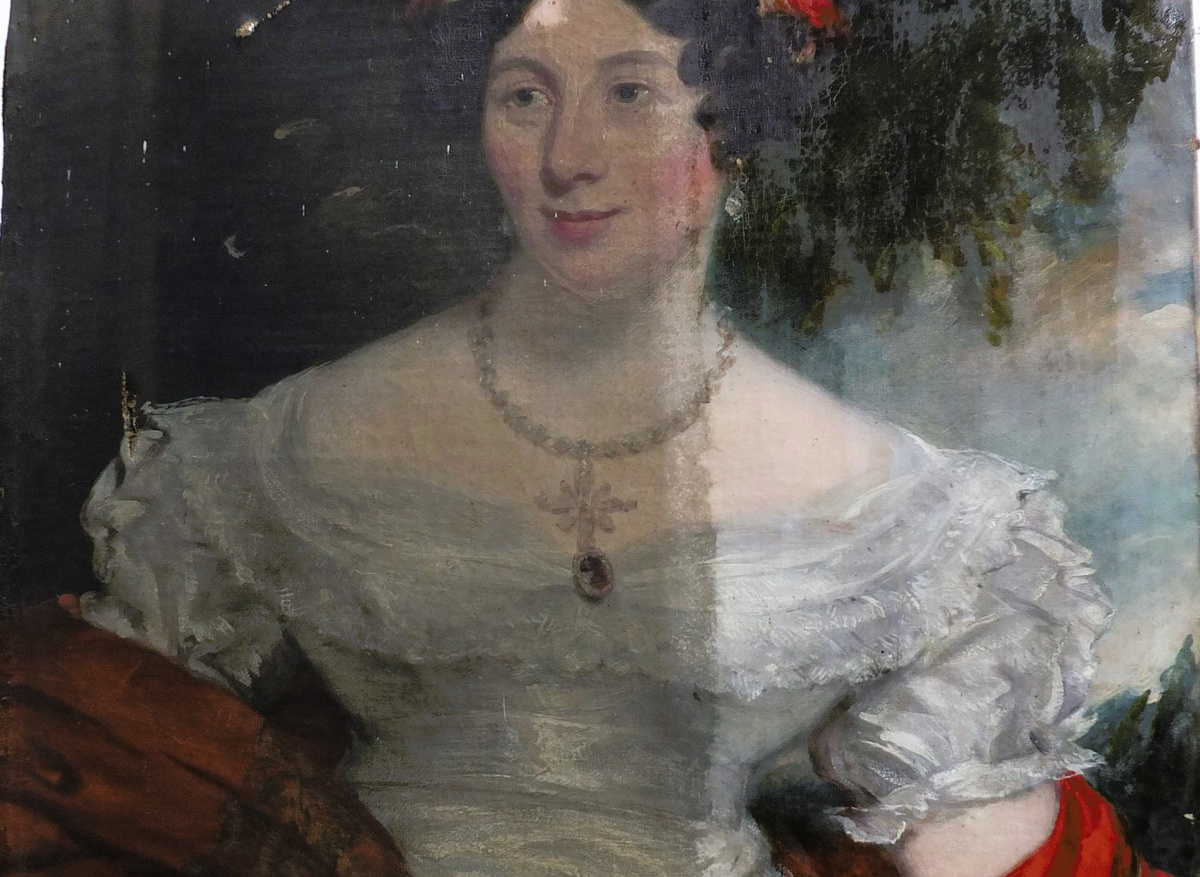
A family portrait during cleaning

A family portrait during cleaning

This early C19th portrait of a lady in a turban was almost completely hidden by layers of dirt.

When these were removed, paint of good quality and lovely condition was revealed.

Long tears, deformations and brittle canvas meant that lining was necessary, after which the canvas was restretched on its original stretchers.

Minimal restoration was needed and the painting was revarnished, all materials used being conservation quality and fully reversible.

Discuss a project like this
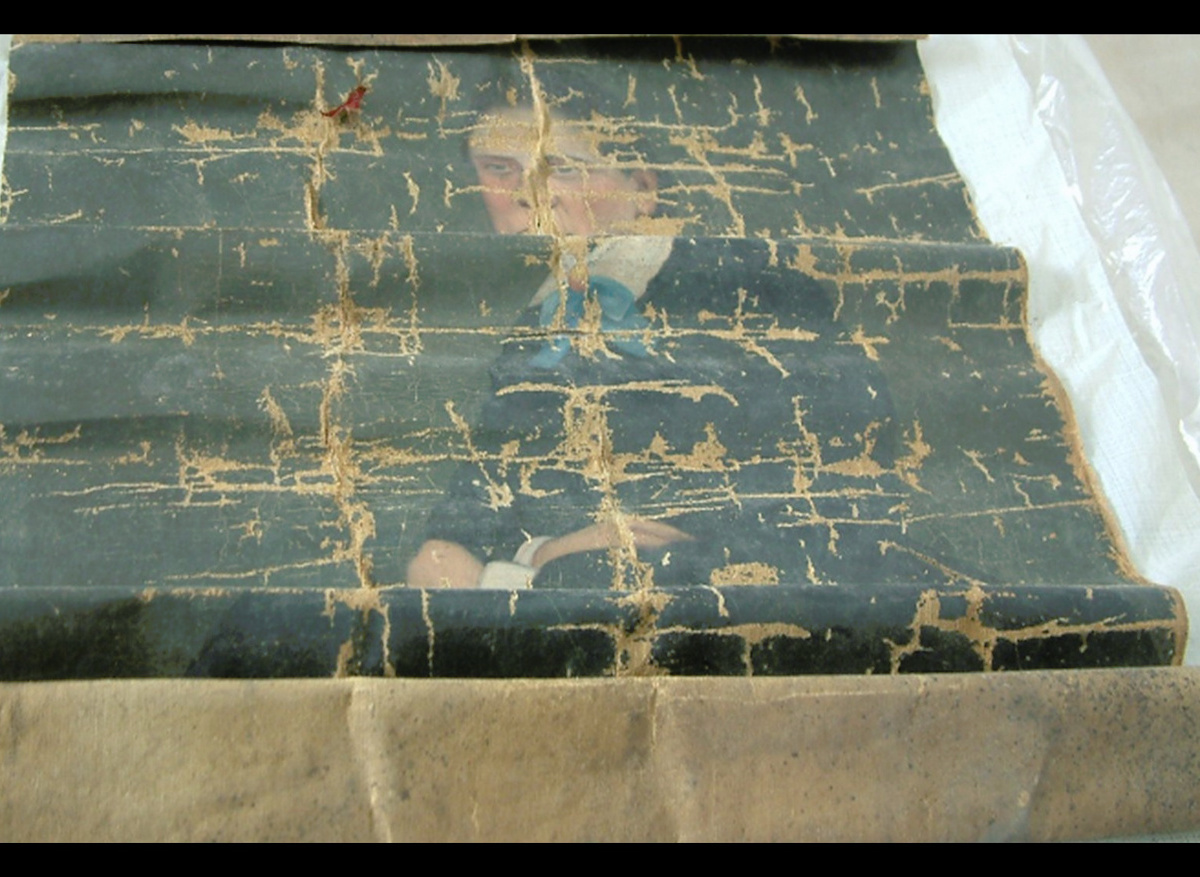
Unstretched, rolled, folded and creased canvas

Unstretched, rolled, folded and creased canvas

The damage to this family portrait was severe, as it had been cut from its stretchers, folded, rolled and then compressed over a long period of time.

Inevitably, this caused the paint layer to flake off dramatically. After discussion with clients, the extensive and expensive work required to reconstruct the image was confined to a central oval, and the picture was framed accordingly.

Reconstruction was entirely successful.

Discuss a project like this

What clients say

“We are very excited by the discovery of a kingfisher that had been hidden for two centuries after being painted over by Constable. The Millstream had not been cleaned for 100 years and conservator Ros Whitehouse has also brought the painting back to life. We are grateful for her skill and to the Constable Trust for generously supporting the cleaning.”

Cllr Bryony RudkinCulture portfolio-holder, Ipswich Borough Council

“Go to Ros, she's the best, you'll be in safe hands.”

A Somerset picture framerRecommending Rosalind to a client, 2026

“Ms Whitehouse’s proposals have been presented in detailed and comprehensive appraisal reports. I have found Ms Whitehouse helpful and approachable if and when additional information was required.”

“A key attribute is Ms Whitehouse’s ability to work with other contractors as at Kedington where the conservation of hatchments had to coincide with a tight timescale to match conditions made by funders and the redecoration of the nave.”

James HalsallDiocesan Advisory Committee for the Care of Churches

“Over many years Rosalind Whitehouse’s professional input to conserving paintings in Colchester and Ipswich has proved essential. The collections range in date from 15th century panel paintings to the present day and significantly cover the work of Thomas Gainsborough and John Constable.”

“The work carried out on two Constable portraits not only revived those paintings but helped in correctly identifying the works as by Constable. Rosalind’s approach has always been thorough with carefully constructed methodologies that provide a detailed breakdown of the work to be carried out. This was very important in a public funded institution where budgets are tight.”

Emma RoodhouseCurator of paintings, Colchester and Ipswich Museums

“Rosalind has restored pictures for me over many years and I have always been very impressed and pleased with her work. She approaches her work with great professionalism and yet is very approachable and friendly. One is informed before work starts with an extensive conservation report and estimate of costs and this is followed up on completion with a thorough treatment report detailing what has been achieved. Rosalind has restored a great variety of paintings for me over the years and I have always been delighted with the results; I have no hesitation in recommending her.”

Nicholas HollowayCollector and Dealer
Read all client stories →

Further projects from the earlier website

Portrait of Mary Cotton, Countess of Denbigh, and her two sons

Attrib. Sir Nathaniel Dance (1738-1811). Oil on canvas, 40” x 50”. Inscribed and dated 1770, recto and verso.

This painting had been accidentally damaged, and came to the studio for full cleaning, lining and restoration. Brown grime, yellowed varnish, and repaint from the last restoration were removed. This revealed unfaded, original paint colours at the edges of the painting, where they had been hidden from light by the frame rebate.

After restoration the painting was photographed, and a digital image was made, to indicate the lost colours of the composition.

Discuss a project like this

Portrait of the Artist’s Mother, by John Constable

Colchester and Ipswich Museums, 2008.

This painting, recently identified, needed cleaning and some consolidation of the turning edges. Cleaning exposed old damages, which had been only crudely restored in the past. The completed work may be seen in Christchurch Mansion, part of Ipswich Museums, in 2009.

Discuss a project like this

Portrait of John Newton, 1749 – 1816

Oil/canvas, glued to strawboard, 29 x 24”. School of Raeburn (Private owner.) 2008.

The painting had been cut from its stretchers and glued to strawboard, resulting in unsightly bubbling between canvas and board. It had also been coated with a thick varnish, now discoloured. Removal of varnish revealed fresh, economical brushwork characteristic of Raeburn, and removal of the board and glue revealed a canvas maker’s stamp which showed the canvas had been supplied by Raeburn’s favourite colourman.

Discuss a project like this

Early C18th Family Portrait

This picture had suffered much wearing of the surface during its long life, which had included at least two restorations. In the most recent one, an interesting detail in the background of a ship crashing upon rocks had been completely overpainted. There was enough detail left to make reconstruction of small missing areas possible, thus restoring the legibility of the image – and telling us more of the life of a seagoing man.

Discuss a project like this

Shutting Up The Geese, by Gilbert Spencer

The painting had been hung in a large kitchen, and flaking had developed in two areas only, the principal one being the area of black paint depicting the dark interior of the shed. The painting was cleaned, the curling paint layer treated and secured, and losses filled and retouched.

Discuss a project like this

A Dutch panel painted in Amsterdam around 1620

Oil on oak panel, in its original veneered frame.

Paintings on oak panel from this period demand particular care: the wood itself moves with the seasons, and the original frame is part of the object's history. Treatment respects both the painted surface and the panel and frame that carry it.

Discuss a project like this

Client list

Work has been carried out for the following institutions, as well as for many private owners:

  • Local Authority Museums and collections: Ipswich and Colchester Museums, Chelmsford Museum, Braintree Museum, Bishops Stortford Museum, Waltham Abbey Museum, Essex Records Office, Witham Local authority, Essex County Council
  • Privately owned collections accessible to the public: Sir Alfred Munnings Museum, Dedham; The Britten-Pears Foundation, Aldeburgh; The Jockey Club, Newmarket
  • Cambridge colleges and Army regiments
  • Drapers’ Hall; Worshipful Company of Farmers
  • Parochial Church Councils: Sawbridgeworth, Lawford, Alpheton, Sudbourne, Thorington, Worlingworth, Kedington, and others
Discuss a project like this